
Bodybuilding Nutrition: 9 Simple Rules for Beginners
In short
Starting bodybuilding nutrition? Choose whether you are building muscle or cutting, get enough protein and carbohydrates, and watch your weight trend. You do not need an advanced bodybuilder's menu to begin. These nine rules give you a way to start today.
Strength training, enough rest, and nutrition work together when you want to build muscle. Give all three your attention. Here I want to focus on the nutrition basics.
Beginners often follow meal plans meant for advanced bodybuilders. Don't waste your time on that. Start with the basics instead of calculating every meal, and take on these rules gradually until they feel like part of your routine.
You can learn more about nutrition over time. At the start, even small changes can make a difference you feel. Let's start.
1. Building muscle or cutting
First, decide what your main goal is right now: build muscle or cut body fat. They call for different amounts of food.
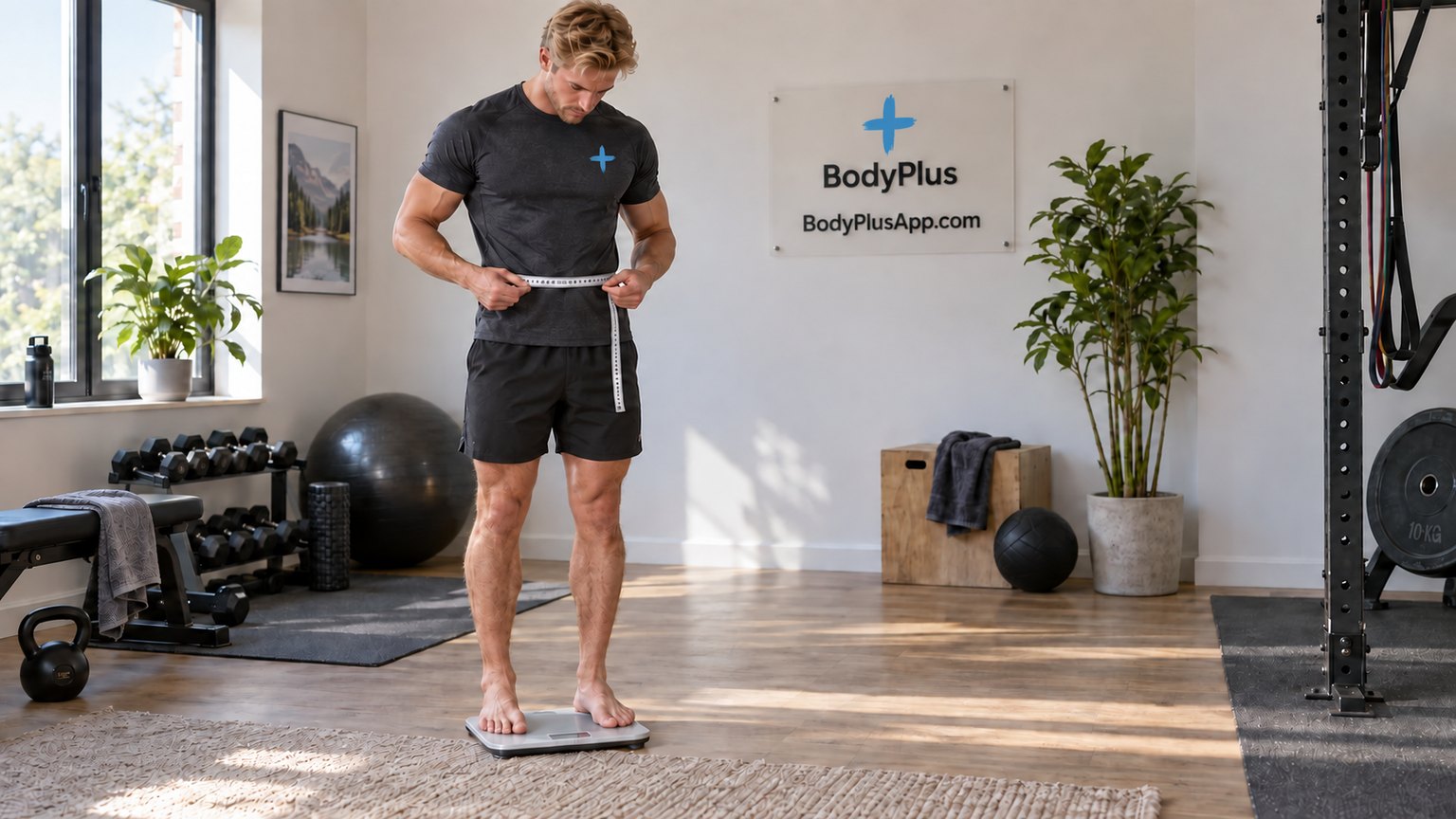
Food gives your body energy and building material. When you want to build muscle, you generally eat a little more than you use. When you cut, you eat less and your body draws on stored energy.
In an energy deficit, building muscle is harder. Choose one main direction for now: a muscle-building phase, or "bulk," or a fat-loss phase, or "cut." This is a guide to bodybuilding nutrition, not a detailed cutting plan.
If you decide to build muscle, expect some body fat gain along the way. A little gain is part of a bulk, even for Mr. Olympia competitors. Keep an eye on the weight trend rather than chasing a promise of muscle gain with no fat gain.
Some trainers sell a method that promises you can build muscle and lose fat together. I would be wary of that promise. I still prefer one clear goal per phase because it is easier to follow.
How much energy do you need?
There is no single number for everyone. A BMR calculator gives you a rough estimate of the energy your body uses at rest. Your daily needs are higher than that, because you also move and train. Treat the estimate as a starting point, and let your weight log (rule 5) show you how your body actually responds.
2. Set your protein amount
If I had to pick one nutrition number to focus on, it would be protein. If you want to develop your body, getting enough matters.
Why is protein so important?
Protein is made from 20 amino acids. When you eat it, your body breaks it down and uses those amino acids to make new proteins, including muscle protein. Nine amino acids are essential, meaning you need to get them from food.
Training can cause microscopic muscle damage, and your body adapts to the load. The amino acids from your food help build and repair muscle. A 2018 review by Damas and colleagues found that damage alone does not drive growth; training and protein both matter. The International Society of Sports Nutrition (ISSN) says resistance training and protein work together to stimulate muscle protein synthesis.
How much protein?
For bodybuilding, aim for 2 to 2.2 g of protein per kg of body weight every day. The ISSN gives most exercising adults a broader range of about 1.4 to 2.0 g per kg (about 0.6 to 0.9 g per lb), while an off-season bodybuilding review (Iraki 2019) suggests about 1.6 to 2.2 g per kg (about 0.7 to 1.0 g per lb). My target is at the upper end of those general ranges for healthy adults who train.
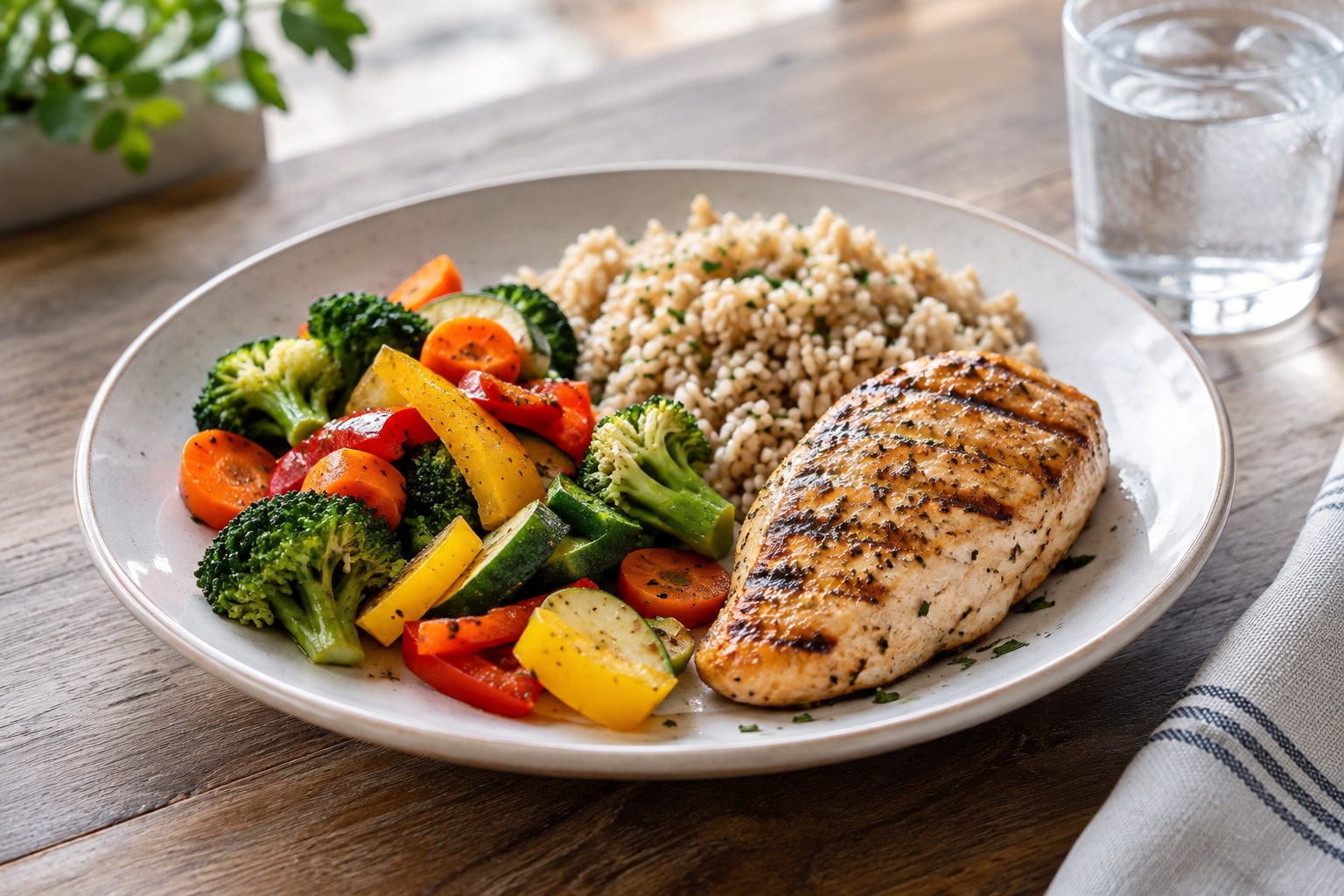
For someone who weighs 80 kg (about 176 lb), 2 to 2.2 g per kg means 160 to 176 g a day. If you eat much less today, build up gradually. The protein guide explains more.
Complete and incomplete protein
Protein sources are often called complete or incomplete. A complete protein provides all nine essential amino acids in useful amounts. Chicken, steak, eggs and fish are examples.
Many plant proteins are lower in one or more essential amino acids. Pair grains and legumes across the day for variety: chickpeas and rice, or rice and beans. You can find more ideas in the plant-based protein guide.
Get most of your protein from food. Start with the high-protein foods list. I also like a protein shake during the day when it makes the target easier, though you do not need one if food covers it. See the protein powder guide.
3. Spread your protein over the day
I prefer five or six smaller meals a day to two or three large ones. Spreading protein out makes each meal easier for some people to digest; a very large protein serving can leave you bloated or gassy.
An off-season bodybuilding review (Iraki 2019) suggests spreading protein over three to six meals. The ISSN protein position stand gives about 20 to 40 g of high-quality protein per meal as a useful range. I would start with your daily total and choose a meal pattern you can keep, without promising that it controls cortisol.
For example, an 80 kg person aiming for about 160 g of protein could spread it over five meals like this. The foods are examples, and the amounts depend on your portions:
| Meal | Example protein source | Protein (about) |
|---|---|---|
| Breakfast | Greek yogurt and eggs | 30 g |
| Midday | cottage cheese and toast | 30 g |
| Lunch | chicken breast with rice and vegetables | 35 g |
| After training | protein shake with fruit | 30 g |
| Dinner | fish or tofu with brown rice and a salad | 35 g |
| Total | 160 g |
4. Get enough carbohydrates
Carbohydrates are an important part of bodybuilding nutrition. Don't ignore them because low-carb eating is popular for cutting. If your goal is to build muscle and train hard, you need enough carbohydrates.
Your digestive system breaks carbohydrates down into sugars. As blood sugar rises, the pancreas releases insulin, which helps move that sugar into cells to use for energy. Your muscles store some of it as glycogen, a fuel you use in training.
This fuel helps you push yourself during workouts. A bodybuilding contest-prep review (Helms 2014) cites about 4 to 7 g of carbohydrate per kg of body weight per day for strength sports, depending on training. A sports-nutrition position statement (Thomas 2016) says longer, harder training raises carbohydrate needs. Those are guides, not a number everyone needs to hit.
If a very low-carb diet leaves you with too little energy to train, it does not serve your muscle-building goal. If you also eat fewer calories than you use, your body draws on its stores. I prefer to get most of my carbohydrates from complex, fiber-rich foods. They generally break down more slowly and can give you steadier energy through the day, though the whole meal matters too. Try beans, rice, peas, whole-wheat pasta and oats. See the carbohydrates guide.
And fats?
Do not forget fat while you focus on protein and carbohydrates. Your body needs some fat to absorb certain vitamins. The off-season bodybuilding review (Iraki 2019) recommends moderate amounts. Olive oil, nuts, seeds, avocado and fatty fish are options; see the healthy fats guide.
5. Keep a body-weight log
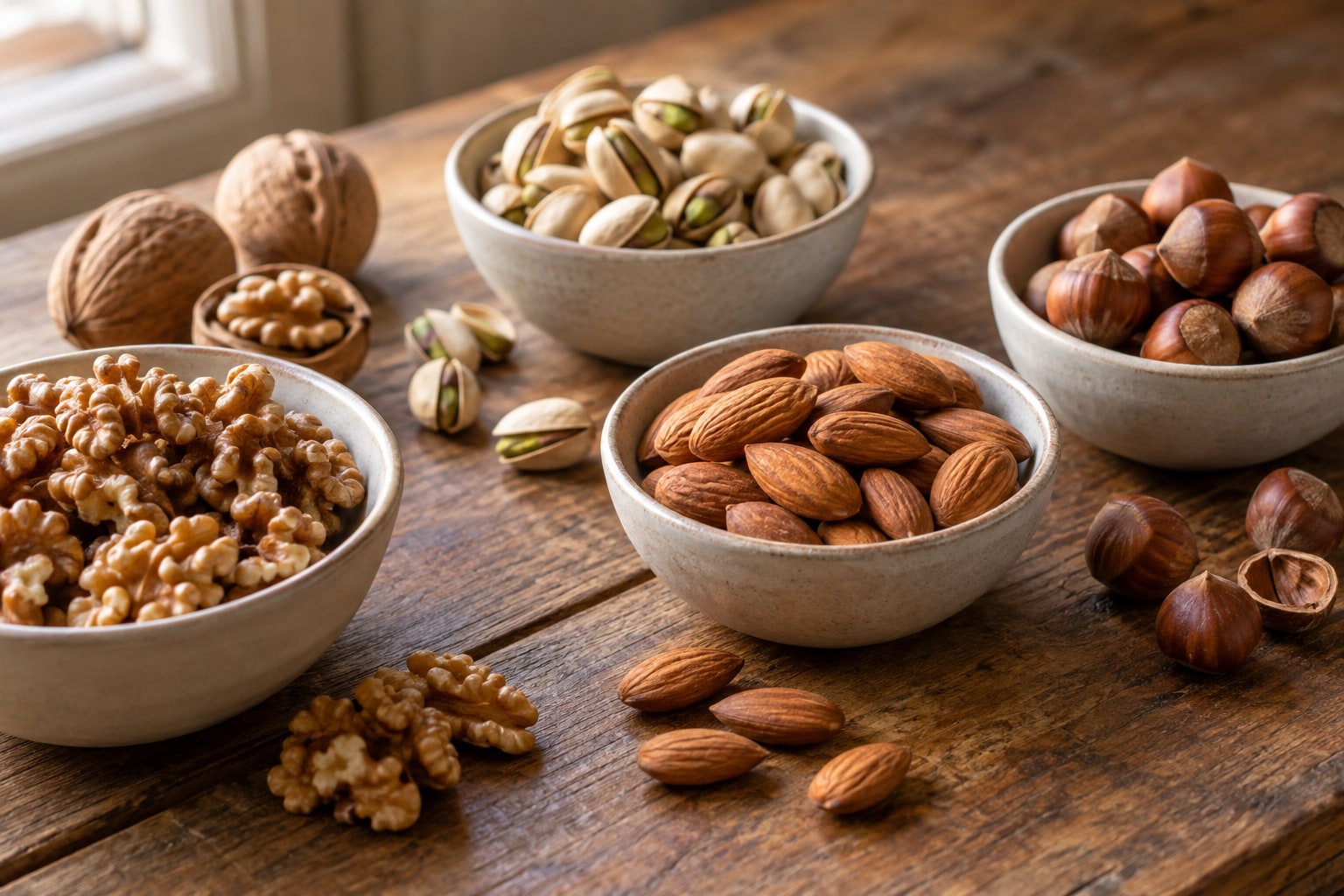
This may be my most important bodybuilding nutrition tip, whether you are bulking or cutting. Weigh yourself once a week or once every two weeks: same day, same time, same amount of clothing. Write the number in your phone or in a notebook.
The record shows whether you are moving toward your goal or staying in the same place. Remember that weight is not one exact number; water and the amount of food in your body move it around. Look at several weigh-ins together.
How fast should your weight go up?
If you want to build muscle, the off-season bodybuilding review (Iraki 2019) suggests gaining about 0.25 to 0.5% of body weight per week for beginners and intermediate lifters, and less for advanced lifters. It is a guide from one narrative review, not an exact target for you.
For example, for a beginner or intermediate lifter who weighs 70 kg (about 154 lb), that is about 175 to 350 g (about 0.4 to 0.8 lb) a week. It is very hard to hit that number exactly, so if you gain a little more or less, that's fine.
This is trial and error. If you are trying to bulk and have not gained for a week or two, try eating a little more. If the gain is too fast, pull back a little, perhaps on carbohydrates. Then check the next couple of weigh-ins.
Here is what a log can look like for that example person, weighing in once a week:
| Week | Weigh-in | What it tells you |
|---|---|---|
| 1 | 70.0 kg (about 154.3 lb) | starting point |
| 2 | 70.4 kg (about 155.2 lb) | up, but one week can be water |
| 3 | 70.2 kg (about 154.8 lb) | a small dip; normal fluid swing |
| 4 | 70.6 kg (about 155.6 lb) | trend up about 0.2 kg a week: on track |
| 5 | 70.6 kg (about 155.6 lb) | no change this week |
| 6 | 70.6 kg (about 155.6 lb) | flat for two weeks: eat a little more |
Make one adjustment at a time. The log is there to guide you, not to judge you. If weekly weighing feels stressful, use the every-two-weeks option.
6. Eat a meal after training
There are a lot of myths about eating after training, but I still like to make that meal part of my routine.
A 2013 meta-analysis by Schoenfeld and colleagues found that, once total daily protein was accounted for, protein right around the workout did not add a clear muscle-growth benefit. Your daily total matters more than the exact minute you eat.
Here is why the meal can still help:
Glycogen
Glycogen is stored glucose that your muscles use for energy. Training uses some of it. I like fruit after a workout because it is an easy way to eat some carbohydrate, but you do not need to refill glycogen immediately after an ordinary session. The ISSN nutrient-timing position stand says fast replenishment matters most when another demanding session is less than about four hours away.
Protein after training
I recommend about 20 to 30 g of protein after training, especially if you did not eat in the two hours before it. The ISSN position stand says protein before or after exercise supports muscle protein synthesis, and the size and timing of the earlier meal affect how useful this one is. Whey is a quick option I like; a regular meal with protein works too.
7. Take a break now and then
Every bodybuilder runs into this now and then: your schedule gets crowded and you miss several workouts. You look in the mirror and feel that you have grown. Why? Recovery.
Rest from training, along with eating well, gives your body time to recover. You can read more in the how to build muscle guide.
I also like taking a break from a strict eating routine from time to time. You might have a "cheat day" every 10 to 14 days and eat foods you love, then return to your usual plan the next day. Some people prefer one "cheat meal" a week instead of a whole day. If you choose that, you can ease up on carbohydrates elsewhere that day. Pick the version that helps you stay consistent; one meal does not need to become a reason to punish yourself afterward.
8. Vegetables and fruit
Fruit and vegetables are an important part of bodybuilding nutrition. They bring vitamins and minerals as well as fiber.
Protein is a building block for muscle, but your body also needs vitamins and minerals for its normal processes. Calcium and vitamin D, for example, help keep bones healthy. That matters when you train and put load on your body.
If your meals have little fiber today, add fruit, vegetables and whole grains step by step and drink water with them, so your stomach has time to get used to it.
Water
Drink water regularly through the day and around your workouts, and drink more when it is hot or when you sweat a lot. How much you need depends on your body, your training and the weather. Never dehydrate yourself on purpose to look leaner: the Helms 2014 review warns that the dehydration practices some competitors use before a show can be dangerous.
9. Build habits
Don't try to turn your whole lifestyle 180 degrees at once. Most people who change everything in one go manage it for a short time, and then go back to their old habits.
To keep going with bodybuilding nutrition, do not turn your lifestyle 180 degrees overnight. Build one habit every week or two. Start by adding vegetables and fruit; the following week or two, focus on getting enough protein, and continue from there.
Here is a simple example of that gradual approach:
| Weeks | New habit | Rule |
|---|---|---|
| 1-2 | add fruit or vegetables to meals | 8 |
| 3-4 | set a daily protein target and spread it through your meals | 2, 3 |
| 5-6 | add carbohydrates that help you train | 4 |
| 7-8 | log your weight on the same day each week or every two weeks | 5 |
| Later | make an after-training meal part of your routine | 6 |
Bodybuilding is a long-term pursuit. At the beginning, even small changes can feel noticeable.
Bottom line
You do not need an advanced bodybuilder's menu. Choose your goal, set your protein, eat enough to support training, watch the weight trend, and add one habit at a time. Pair your nutrition with a workout plan and rest.
Frequently asked questions
Is there a bodybuilding diet plan I can just follow?
No single menu fits everyone, and menus made for advanced bodybuilders rarely work for beginners. Start with the nine rules above, one habit at a time, and let your weight log show you what to adjust.
How many calories do I need to build muscle?
There is no single number. A BMR calculator gives you a rough starting estimate (see "How much energy do you need?" under rule 1), and your weigh-ins show you whether to eat a little more or a little less.
Can I eat for bodybuilding on a budget?
Yes. Eggs, dairy, legumes, rice, oats, frozen vegetables and canned fish are often among the cheaper foods that cover protein and carbohydrates.
Is bodybuilding nutrition different for women?
The same rules apply to adults of any sex. The ranges in this guide are per kg of body weight, so they scale with the person.
Do I need supplements?
Not to build muscle. Most people can cover their needs with food, and protein powder is a convenient option, not a need. Other supplements are outside the scope of this guide.
The information on this page and on this website is intended to provide general information only. The content on this website does not constitute a professional opinion, a recommendation, or a substitute for consulting an expert in a specific field or obtaining a medical opinion. This article is written for healthy adults. It is not medical advice, not dietetic advice and not a personal diet plan. If you have a health condition (for example kidney disease or diabetes), a food allergy or a history of disordered eating, are pregnant or breastfeeding, are under 18, or take medication, talk to a doctor or a registered dietitian before changing what you eat.
Sources
Accessed September 29, 2026.
- Jäger R. et al., "International Society of Sports Nutrition Position Stand: protein and exercise", J Int Soc Sports Nutr 2017;14:20. pubmed.ncbi.nlm.nih.gov/28642676
- Kerksick C.M. et al., "International Society of Sports Nutrition position stand: nutrient timing", J Int Soc Sports Nutr 2017;14:33. pubmed.ncbi.nlm.nih.gov/28919842
- Schoenfeld B.J., Aragon A.A., Krieger J.W., "The effect of protein timing on muscle strength and hypertrophy: a meta-analysis", J Int Soc Sports Nutr 2013;10(1):53. pubmed.ncbi.nlm.nih.gov/24299050
- Helms E.R., Aragon A.A., Fitschen P.J., "Evidence-based recommendations for natural bodybuilding contest preparation: nutrition and supplementation", J Int Soc Sports Nutr 2014;11:20. pubmed.ncbi.nlm.nih.gov/24864135
- Iraki J. et al., "Nutrition Recommendations for Bodybuilders in the Off-Season: A Narrative Review", Sports (Basel) 2019;7(7):154. pubmed.ncbi.nlm.nih.gov/31247944
- Thomas D.T., Erdman K.A., Burke L.M., "Position of the Academy of Nutrition and Dietetics, Dietitians of Canada, and the American College of Sports Medicine: Nutrition and Athletic Performance", J Acad Nutr Diet 2016;116(3):501-528. pubmed.ncbi.nlm.nih.gov/26920240
- Damas F. et al., "The development of skeletal muscle hypertrophy through resistance training: the role of muscle damage and muscle protein synthesis", Eur J Appl Physiol 2018;118(3):485-500. pubmed.ncbi.nlm.nih.gov/29282529