
How to Make a Workout Plan: 7 Steps, With a Fill-In Template
In short
To make a workout plan, first work out your fitness level and set one clear goal. Then choose a split that fits the days you can train, pick mostly compound exercises, and set your sets, reps and rest. Finally, log every workout so you can see whether you are progressing.
When it comes to bodybuilding, building a correct workout plan is very important. Whether your goal is cutting and losing weight or building muscle, you need to know how to build your workout plan the right way (some people call it a workout routine). This guide has everything you need to know about the process, including tips, choosing exercises, choosing a muscle split and more, plus a table to help you pick a split and a template you can fill in. These steps are true both for a gym workout plan and for a home workout plan.
Step 1: Know your fitness level
Before you start building the workout plan, you need to understand what your fitness level is. In general, the levels are divided like this:
- Beginner: training for less than a year, and progressing from workout to workout.
- Intermediate: training for one to two years, and progressing from week to week.
- Advanced: training for two years or more, and progressing from month to month.
This is a very general division. It suits people who put effort into training, nutrition and rest. There are people who train for a year or more with breaks, without putting effort into nutrition and training. They have not built up enough strength and muscle mass, so they are still considered beginners.
It is divided this way because the difficulty level of a workout plan needs to fit the level of the trainee. If you try to do Arnold Schwarzenegger's gym workout plan, and you have only been training for 3 months, it is clear to you that it won't work.
Step 2: Set a clear goal
When you start building the gym workout plan, you need to define a goal. The more precise the goal is, the easier it will be for you to achieve it. Here are a few questions that will help you define a goal:
- Do you want to burn fat, or build muscle mass?
- How many kilos do you want to gain or lose?
- Do you want to improve the weights in certain exercises?
- Is there a body part that is lagging, and you want to focus on it?
- Do you want to improve aerobic fitness?
- Are you looking to improve your health and mental state?
Defining a goal is something very individual. There can be countless more questions, but these are the main ones. It is only important that the goal you set is reasonable and achievable.
Building muscle mass or cutting
Bodybuilders tend to divide the year into two separate categories. The off season is usually considered the "mass" (bulking) phase, in which athletes try to build as much muscle mass as possible. And in the on season, they are "cutting", in order to burn excess body fat. Of course, with competitors there is the matter of steroids, but that is the principle. Just as this is true for competing bodybuilders, it is also true for regular people who want to develop their body.
When you build the workout plan, you need to decide whether you are going to build muscle mass or cut and lose weight. You need to understand what you want to do and adjust the plan.
For example, in a mass phase the body can recover properly and so it is possible to train at very high intensity. In a cut, on the other hand, there is a shortage of food and you have to reduce the intensity. In addition, in a cut you usually increase the amount of aerobic work you do, in order to maximize fat burning. A BMR calculator gives you a starting estimate of your energy needs.
There are a lot of different goals, but it is important to define what they are. You will probably have several goals, which is great. However, you need to understand which goal is the most important to you, and put the emphasis on it.
If one of your goals is general health, the World Health Organization recommends that adults get 150 to 300 minutes of moderate aerobic activity a week (or 75 to 150 minutes of vigorous activity), plus regular muscle-strengthening activity.
Step 3: Don't trust every plan and coach
No matter which goals you chose, know that there are countless ways, exercises, methods and gym workout plans that can get you to the place you want to reach. There is a lot of room for creativity in the world of bodybuilding, but it is also important to use logic.
A beginner cannot gain 10 kilos (about 22 lb) of clean muscle mass in two months, no matter what they do. Yes, even if they train 5 times a day and eat 4,000 calories. It is also important to take into account all the ads you see and the famous people who manage to build an incredible body within three or four months.
Remember that some trainers use performance-enhancing drugs, such as anabolic steroids, in order to sell you quick changes. An Endocrine Society scientific statement links performance-enhancing drug use to a higher risk of death and to a wide range of problems, including hormonal, heart and psychiatric disorders. Remember every time you see these ads: if it is too good to be true, it is probably not true.
Step 4: Choose your training split
After you have gone through the first steps, you need to choose the split of the workout plan. To choose, you need to understand two things:
- What is your fitness level?
- How often can you train?
After you have understood the answers to these two questions, you can choose the split that suits you. It is important to note that the most effective number of workouts for bodybuilding is between 3-4 times a week for most people. Research shows some flexibility here: a 2019 review of 25 studies found that when the weekly number of sets was equal, training a muscle more often made little difference to muscle growth. So choose the number of days you can keep up.
Here are a few plans that suit bodybuilding. If your goal is building strength, see "Other plans" below.
Full body workout (FBW): a plan for beginners
An FBW workout plan is a plan in which you work on the whole body in every workout. There are two reasons for choosing this workout plan:
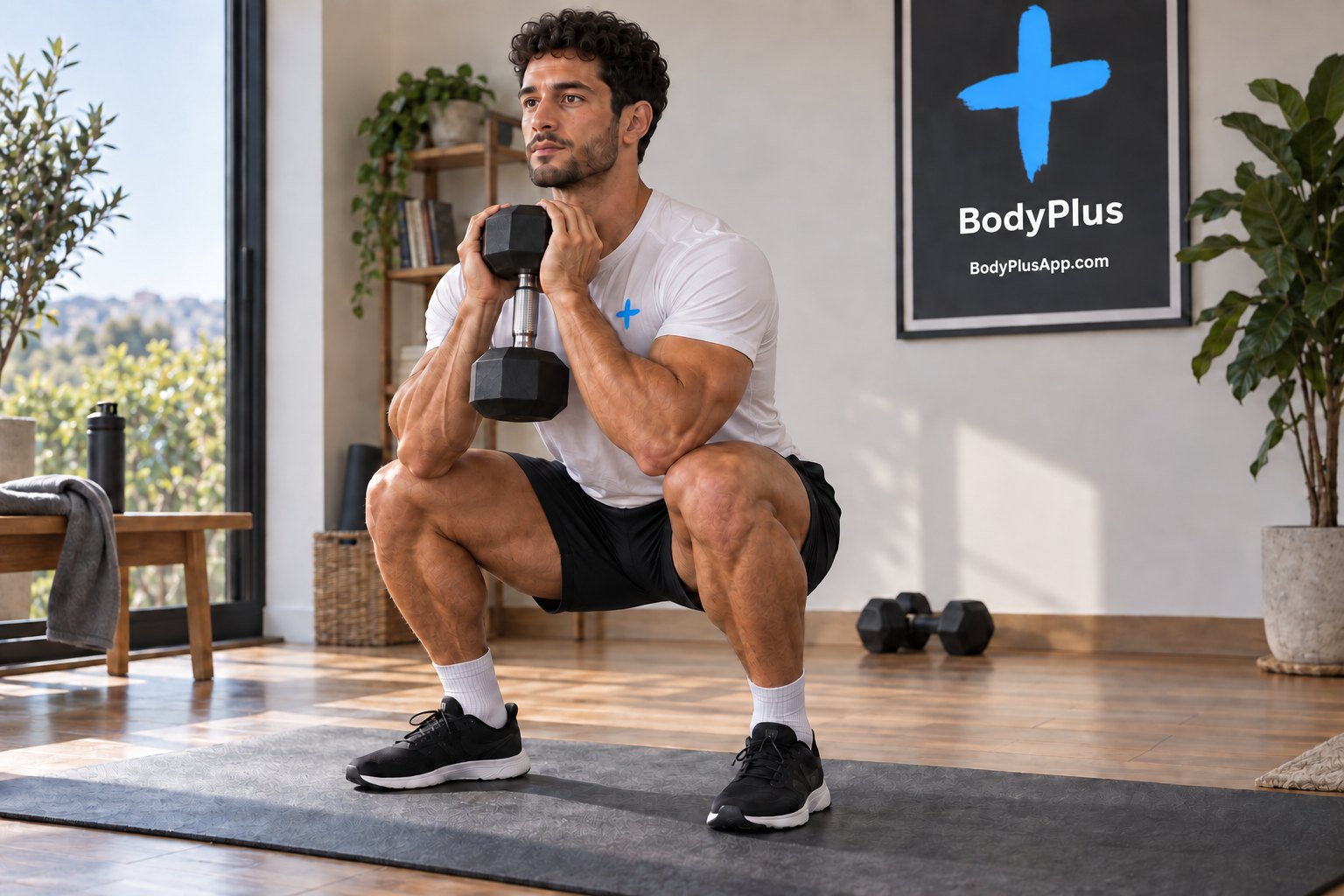
- Beginner trainees. Beginners do not need a high stimulus to develop muscle mass. In addition, it allows practicing the technique of the exercises several times a week.
- Trainees who train 1-3 times a week. This way there will be no muscles that go untrained for a long period.
For most beginner trainees it is worth doing this plan in the first 4-8 weeks. Beyond 8 weeks it starts to become problematic, because the working weights go up and the body will not manage to recover properly from the workouts.
In FBW you mainly choose compound exercises. These exercises work on a lot of muscles at the same time, and so they bring maximum effectiveness to the workout. Usually you do one exercise for each muscle in the body, and between 2-6 sets depending on the size of the muscle.
The full guide, with a ready plan: full body workout plan.
A/B workout plan
An A/B workout plan is a plan in which you divide the body's muscles into 2 different workouts, workout A and workout B. The most common version is upper body and lower body. This plan is more advanced than FBW.
It is worth moving to the A/B plan after 4-8 weeks of FBW. This is the time range in which you start to exhaust the FBW workout plan and progress starts to slow down.
You can do this workout plan between 3-4 times a week. After you exhaust this plan you can progress to an ABC workout plan.
The full guide: upper lower split.
ABC workout plan
A workout plan that suits people with a training history of at least 2-3 months. You do this plan in between 3-4 workouts a week. The difference is that you divide the muscles of the body into 3.
That is, if you do 3 workouts a week then you train each muscle once. If you do 4 workouts a week, then every week one of A, B or C comes twice, and it rotates: A twice in week 1, B twice in week 2, C twice in week 3.
In an ABC workout you can already start reaching heavy weights. In this split the muscles have enough work volume and also enough rest time between one workout and the next. After that you can already progress to ABCD. That is, to split into another day.
The full guide: ABC split.
Other plans
The plans I brought above are the most basic ones, and suit mainly beginners and intermediates. There is a wide variety of other gym workout plans and endless splits, such as Push, Pull, Legs or ABCD.
In addition, there are workout plans whose goal is building strength, but they are less suitable for building muscle mass:
- Starting Strength (SS)
- 5x5
Which split fits you?
| Where you are | Plan |
|---|---|
| Starting out, or training 1-3 days a week | Full body, for the first 4-8 weeks |
| After 4-8 weeks of full body | Upper/lower (A/B) split, 3-4 days |
| At least 2-3 months of training, 3-4 days a week | ABC split |
| More experience | Push/pull/legs split |
Step 5: Understand compound and isolation exercises
Before I explain to you how to choose exercises in a workout plan, I will explain the two types that exist.
Compound exercises
A compound exercise is a movement that requires a combination of several joints at the same time and works a lot of muscles together. A popular example is the squat. It works a lot of muscles, such as the core, the hamstrings, the calves, the glutes and the lower back. These movements require a lot of energy, mental focus, heavy load on the body, stability and technique.
Compound exercises will give us general work for a lot of muscles at the same time, and it is recommended to do them at the beginning. At the beginning of the workout you have the most energy, so you can lift the heaviest weights and use their full effectiveness.
Isolation exercises
An isolation exercise is a focused movement with one joint that works one muscle or one specific muscle group. A common example is elbow flexion (curls), which work only the front arm and use the elbow. In addition, there are muscles that are very hard to work without isolation exercises, such as the deltoid muscles (the side shoulder) in the shoulders.
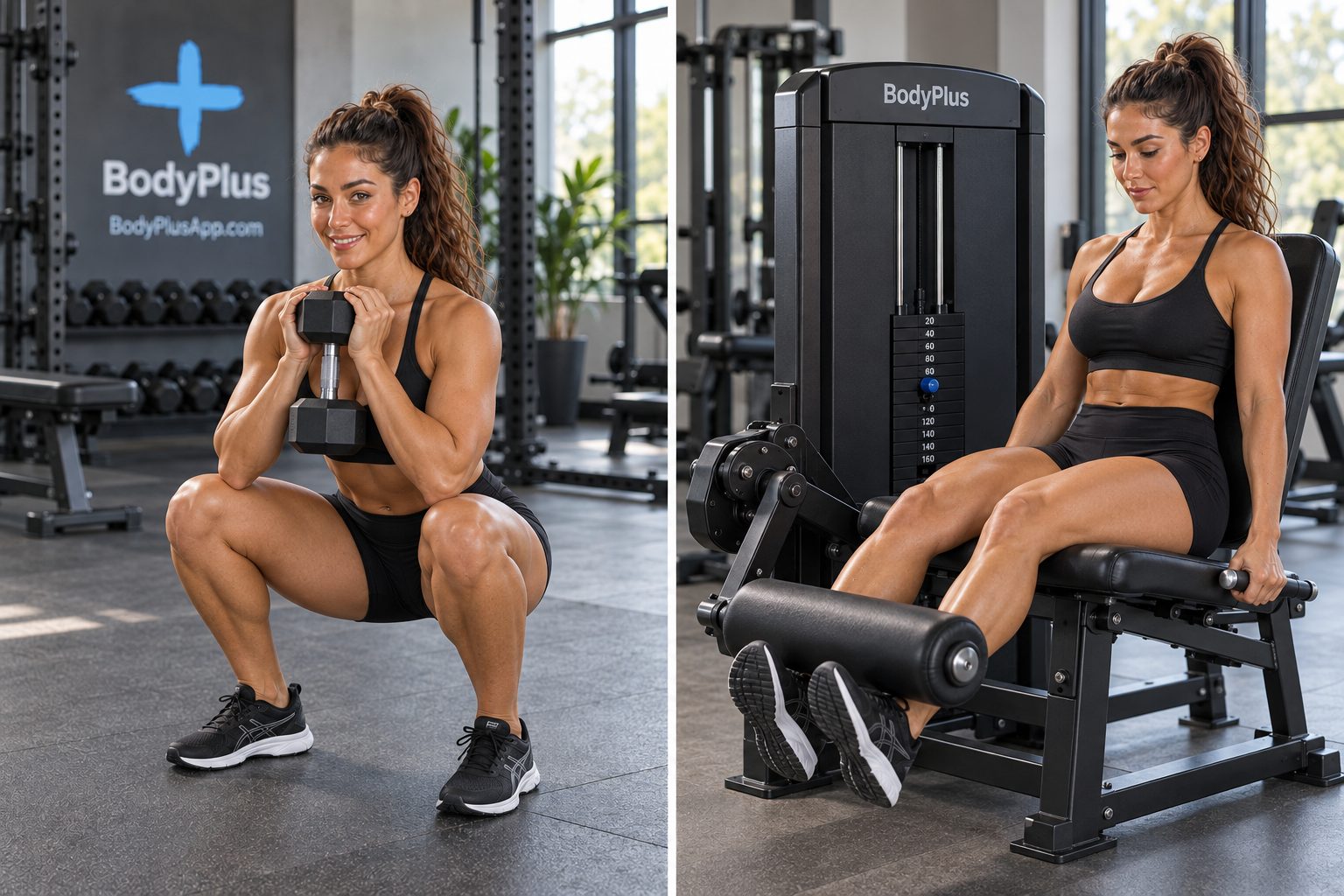
These exercises will help us focus the load on a specific muscle. This will help us increase the volume it receives, without increasing the general fatigue too much.
Step 6: Choose your exercises
In order to complete building the workout plan, you need to choose the right exercises. The choices you make in the plan will be a key tool in achieving your goals.
If the plan is an FBW workout, most of the exercises should be compound exercises. You choose them because on one hand you need to work the whole body, and on the other hand the number of sets in a workout that you can do is limited. If you choose more advanced plans, such as A/B or ABC, you need to add isolation exercises as well.
If you are a weightlifter who wants to build pure strength, you need to focus on the big four: bench press, squat, the deadlift, and overhead press (plus Olympic lifts for competitors). The whole purpose of weightlifters' training is to improve the weights in these exercises.
Of course, before you choose the exercises, you need to make sure you have access to the equipment required for them. Training at home? See home workout exercises for options that need little or no equipment.
For exercise ideas by muscle, see our guides to the best chest, back, shoulder, leg, glute, biceps, triceps and ab exercises.
A simple way to fill a workout
- First: one or two compound exercises for the muscles you want to emphasize.
- Next: compound exercises for the other muscles in that workout.
- Last: one or two isolation exercises, for example for your arms, side delts, calves or abs.
Step 7: Set your sets, reps and rest
- Reps (repetitions): the number of times you do the same movement of the exercise in a row.
- Sets: the number of times you do the reps in a row.
For example, if a plan says to do 3 sets of 10 reps of pull-ups, you do 10 pull-ups, rest, and then do 10 reps again. You do this 3 times.
You do the number of exercises according to the workout plan you chose. Certain goals in building a workout plan require different rep ranges. According to studies, this is the number of reps you need to do:
- Strength: 1-5 reps per set
- Hypertrophy (building muscle mass): 8-12 reps per set
- Endurance: 15 and more reps per set
These ranges are guidelines, not hard borders. In one small study, 18 trained young men did 3 sets of 7 exercises, three times a week, for 8 weeks, with either 8 to 12 reps or 25 to 35 reps per set, taking every set to failure. Both groups built similar muscle. The heavier group gained more squat strength, and the lighter group gained more muscular endurance.
Every certain period, it is worth changing the rep ranges. This way your body will not adapt to one range, and you will manage to keep progressing over the long term.
The 2026 position stand of the American College of Sports Medicine (ACSM) reviewed 137 systematic reviews. It found better muscle growth with 10 or more sets per muscle group per week, and more strength with heavier loads (80% of your one-rep max or more) and with at least two sessions a week.
Track and review your plan
One of the most critical things for the success of a workout plan is to record it and give feedback on it. Make 2 lists:
- Your lifts: the date, the working weight, the number of reps and sets in compound exercises.
- Your body weight: the date and body weight.
If you see that you are not progressing, you need to understand what is the cause of the lack of progress. Usually it is related to the workout plan, to nutrition or to recovery. After you understand what is not right, you need to fix it.
Always look at the trend and not at a single workout. Many times you will have bad workouts, in which you will lift less. However, if over the range of several workouts you are progressing, then you are on the right path, which is great. The higher your level, the slower you will progress.
Take into account that if you are not progressing, you are wasting your time. In addition, these lists have two more important advantages:
- Motivation. When you know how much you did in the previous workout, you always want to do something more.
- A record of your progress and the road you have passed. Every time you see progress, you will be filled with pride and it will push you forward.
How to add weight
A simple rule: pick a rep range, for example 8 to 12. When you reach the top of the range on every set, add a small amount of weight next time, and work back up. A one-rep max calculator can help you follow your strength in your main lifts over time.
| Date | Exercise | Weight | Set 1 | Set 2 | Set 3 |
|---|---|---|---|---|---|
| Mon | Goblet squat | 16 kg (about 35 lb) | 12 | 10 | 9 |
| Wed | Goblet squat | 16 kg (about 35 lb) | 12 | 11 | 10 |
| Fri | Goblet squat | 16 kg (about 35 lb) | 12 | 12 | 12 |
| next Mon | Goblet squat | 18 kg (about 40 lb) | 10 | 9 | 9 |
A fill-in workout plan template
Copy this table for each workout (A, B, C and so on). Fill in the plan columns first, then log each session in the last columns.
For a place to keep the plan on your phone, see our BodyPlus workout and meal planner. You enter the plan and log your sessions yourself.
| Exercise | Type | Sets | Reps | Rest | Week 1 weight and reps | Week 2 weight and reps |
|---|---|---|---|---|---|---|
| 1. | compound | |||||
| 2. | compound | |||||
| 3. | compound | |||||
| 4. | isolation | |||||
| 5. | isolation | |||||
| 6. | isolation or core |
Then check your whole week:
| Question | Your answer |
|---|---|
| Days I can train | |
| My level (beginner, intermediate, advanced) | |
| My main goal | |
| My split | |
| Rest days between hard workouts for the same muscles |
Safety
Start new exercises with a light weight and learn the movement before you add load. Before your first heavy exercise, warm up for a few minutes and do one or two lighter sets of that exercise. On heavy squats and presses, use safety arms or a spotter. End the set when your technique breaks down, and stop if something hurts. When you add weight, do it only after you reach the top of your rep range with clean technique on every set.
Bottom line
The road to your goal starts with choosing the right workout plan. There are countless types of bodybuilding plans, but it is important that the plan matches the goal.
In addition, it is important that you understand why you are doing something specific in the gym. Everything that you do in training should have a logical reason. Of course this is true both for a gym workout plan and for one at home.
Once you have created your workout plan, you will need to change the workouts every certain amount of time, two months at most. The reason for this is that after a certain time the body adapts to a workout plan and stops progressing in it. You can make small changes such as: the exercises, the order of the exercises, the number of reps, the muscle split in the workout and more.
Building a workout plan is a hard process, especially for beginners. Start simple, write down every workout, and adjust as you learn. That is how you save yourself a lot of time, hard work and frustration.
Frequently asked questions
How do I create a workout plan for beginners?
Start with a full body plan (FBW) for the first 4-8 weeks, built mainly from compound exercises, with 2 to 6 sets per muscle. Then move to an A/B split.
How many days a week should I train?
Three to four days a week suit most people who want to build muscle. If you can only train one to three days, a full body plan is a good fit.
Can I make a workout plan at home?
Yes. Follow the same steps and choose exercises that fit your equipment, such as dumbbells, bands or body weight.
How often should I change my workout plan?
Change the workouts every so often, two months at most. Small changes are enough: the exercises, their order, the number of reps or the muscle split.
Can I build a workout plan for weight loss?
Yes. Choose cutting as your main goal in step 2, keep strength training, add some aerobic work, and expect to lower the intensity a little while you eat less.
Should I write my plan in a spreadsheet or an app?
Either works. What matters is that you log every workout, so you can see your trend.
The information on this page and on this website is intended to provide general information only. The content on this website does not constitute a professional opinion, a recommendation, or a substitute for consulting an expert in a specific field or obtaining a medical opinion. It is not medical advice. BodyPlus is not a medical device. If you have a health condition or an injury, or are pregnant, talk to a qualified healthcare professional before starting. Stop exercising and seek appropriate help if you feel pain, dizziness or other concerning symptoms.
Sources
Accessed September 17, 2026.
- Currier B.S. et al., ACSM Position Stand, "Resistance Training Prescription for Muscle Function, Hypertrophy, and Physical Performance in Healthy Adults: An Overview of Reviews", Med Sci Sports Exerc 2026;58(4):851-872. pubmed.ncbi.nlm.nih.gov/41843416
- Schoenfeld B.J. et al., "Effects of Low- vs. High-Load Resistance Training on Muscle Strength and Hypertrophy in Well-Trained Men", J Strength Cond Res 2015;29(10):2954-2963. pubmed.ncbi.nlm.nih.gov/25853914
- Schoenfeld B.J. et al., "How many times per week should a muscle be trained to maximize muscle hypertrophy? A systematic review and meta-analysis of studies examining the effects of resistance training frequency", J Sports Sci 2019;37(11):1286-1295. pubmed.ncbi.nlm.nih.gov/30558493
- Pope H.G. Jr. et al., "Adverse health consequences of performance-enhancing drugs: an Endocrine Society scientific statement", Endocr Rev 2014;35(3):341-375. pubmed.ncbi.nlm.nih.gov/24423981
- Bull F.C. et al., "World Health Organization 2020 guidelines on physical activity and sedentary behaviour", Br J Sports Med 2020;54(24):1451-1462. pubmed.ncbi.nlm.nih.gov/33239350